
Precision fitness has emerged as a cornerstone of evidence-based wellness approaches, with Zone 2 cardio gaining particular attention for its effects on cellular energy production. This exploration examines two distinct areas of exercise science: the specific adaptations triggered by Zone 2 training and, separately, research into selective antioxidants in exercise recovery contexts.
Understanding Zone 2: The Precision Approach to Aerobic Training
Defining Zone 2 Through Physiological Markers
Zone 2 cardio represents a precisely defined exercise intensity characterized by specific metabolic markers. According to exercise physiology research, Zone 2 falls just below the first lactate threshold, where blood lactate levels hover between approximately 1.5 and 2.0 mmol/L. This corresponds to the upper boundary of the moderate intensity domain. This intensity zone exists where aerobic metabolism predominates, with minimal lactate accumulation.
The metabolic signature of Zone 2 training differs fundamentally from higher intensity exercise. Research indicates that Zone 2 is a low intensity training zone that is almost entirely powered by aerobic metabolism. This means most of the energy expended while riding in Zone 2 comes from the breakdown of fat. This metabolic preference for fat oxidation, rather than carbohydrate metabolism, allows for sustained training periods without glycogen depletion.
The Cellular Architecture of Endurance: Mitochondrial Adaptations
The primary cellular adaptation to Zone 2 training occurs within the mitochondria—the energy-producing organelles within muscle cells. Studies demonstrate that Zone 2 endurance training induces improvements in mitochondrial content, function, and substrate utilization. Research from Professor Bishop’s group observed quantitative changes in mitochondrial parameters.
These adaptations manifest through several mechanisms. Zone 2 training specifically stimulates Type I muscle fibers. Therefore, you stimulate mitochondrial growth and function, which improves your ability to utilize fat. The accumulation of training time at this intensity triggers mitochondrial biogenesis—the creation of new mitochondria—particularly in slow-twitch muscle fibers optimized for endurance activities.
Training protocols suggest that training for 60–120 minutes in a comfortable zone 2 training intensity can have improvements in mitochondrial health, notably changes in mitochondrial content and the efficiency of mitochondrial energetics.
The Molecular Machinery: PGC-1α and Mitochondrial Biogenesis
Master Regulation of Cellular Adaptation
The molecular basis for Zone 2 training adaptations centers on PGC-1α (peroxisome proliferator-activated receptor gamma coactivator 1-alpha), a master regulator of mitochondrial biogenesis. Research demonstrates that PGC-1α is required for complete skeletal muscle adaptations induced by endurance exercise in mice. This protein coordinates the complex genetic programs necessary for creating new mitochondria and enhancing their function.
The regulatory cascade initiated by endurance exercise extends beyond mitochondrial changes. Studies show that endurance exercise training leads to fiber type transformation, mitochondrial biogenesis, angiogenesis, and other adaptive changes in skeletal muscles along with improved metabolic flexibility in both rodents and humans. The p38γ MAPK-PGC-1α regulatory axis emerges as critical for these exercise-induced metabolic adaptations.
Vascular Remodeling and Oxygen Delivery
Zone 2 training stimulates not only mitochondrial adaptations but also vascular changes essential for oxygen delivery. Research indicates increases in the number of endothelial cells per unit cross-sectional area (capillary density). This capillary growth, or angiogenesis, represents a fundamental adaptation to aerobic training.
The importance of vascular adaptation extends beyond simple oxygen transport. As research notes, capillary density is an often overlooked physiological mechanism. Improving the number of capillaries per muscle fiber will improve oxygen delivery and oxidative metabolism. Studies confirm that an increase in capillary density in skeletal muscle improves diffusive oxygen exchange and waste extraction, and thus greater fatigue resistance.
The Paradox of Oxidative Stress in Training Adaptation
Reactive Oxygen Species as Signaling Molecules
Exercise generates reactive oxygen species (ROS) as a natural byproduct of increased metabolic activity. Research reveals that during exercise, physical work increases energy demands, the O₂ uptake, and consequently the formation of ROS. Rather than purely harmful byproducts, these molecules serve essential signaling functions.
The relationship between ROS and training adaptation proves complex. Studies demonstrate that mitochondrial ROS generated during regular exercise are necessary for the activation of primary signaling pathways associated with muscle adaptation. The intensity-dependent nature of this relationship matters: Moderate exercise can increase the antioxidant’s level which facilitates an optimal level of ROS, whereas high intensity exercise can induce ROS formation, giving cellular adaptation.
The Antioxidant Supplementation Paradox
The role of ROS in training adaptation creates an interesting paradox regarding antioxidant supplementation. Research findings indicate that in certain situations, loading the cell with high doses of antioxidants leads to a blunting of the positive effects of exercise training and interferes with important ROS-mediated physiological processes, such as vasodilation and insulin signalling. This suggests that completely eliminating oxidative stress might actually impair training adaptations.
The balance appears critical: Moderate exposure to ROS is necessary to induce body’s adaptive responses such as the activation of antioxidant defense mechanisms. Proper exercise stimulates these adaptive responses and strengthens endogenous antioxidant defense systems, maintaining muscle redox balance through natural mechanisms.
Practical Implementation of Zone 2 Training Protocols
Establishing Training Zones
Implementing Zone 2 training requires accurate zone identification. The lactate threshold method provides the most precise determination, but practical alternatives exist. Heart rate zones, perceived exertion, and the “talk test” (ability to maintain conversation during exercise) offer accessible ways to approximate Zone 2 intensity.
Research emphasizes sustainability: Because you have essentially unlimited fat stores and only limited carbohydrate stores, this intensity is sustainable for very long periods of time. This metabolic efficiency allows for the extended training sessions necessary to accumulate sufficient stimulus for adaptation.
Progressive Adaptation and Time Requirements
The timeline for capillary and mitochondrial adaptations varies based on training status. Studies show that exercise training increases the number of capillaries per muscle fiber by about 10%–20% within a few weeks in untrained subjects, whereas capillary growth progresses more slowly in well‐trained endurance athletes. This suggests that initial adaptations occur relatively quickly, but continued improvement requires consistent, long-term training.
The accumulation of training time proves essential: As you accumulate time in Zone 2, the training stress stimulates development of more and larger mitochondria, particularly in Type 1 (slow twitch) muscle fibers. This allows you to break down more fuel (mostly fat) at a higher rate using aerobic metabolism.
Separately, Research Into Selective Antioxidants
The Science of Molecular Hydrogen
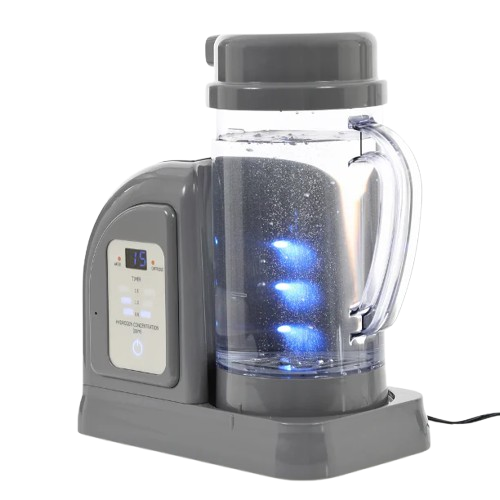
Independent from Zone 2 training research, scientists have investigated molecular hydrogen as a selective antioxidant. Molecular hydrogen (H₂) represents the smallest and most basic molecule, consisting of two hydrogen atoms. Its small size allows it to diffuse rapidly through biological membranes.
Research into molecular hydrogen focuses on its selective antioxidant properties. Unlike broad-spectrum antioxidants that neutralize multiple types of reactive oxygen species, molecular hydrogen appears to selectively target the hydroxyl radical—considered among the most damaging reactive oxygen species. This selectivity theoretically allows for neutralization of harmful radicals without interfering with beneficial signaling molecules.
Exercise Recovery Studies
Several studies have examined molecular hydrogen in exercise contexts. Research protocols have investigated hydrogen-rich water consumption before, during, or after exercise sessions. These studies measure various markers including lactate levels, perceived exertion, and recovery biomarkers.
The timing and dosage protocols vary across studies, with some examining acute effects from single doses while others investigate longer-term supplementation periods. Researchers continue to explore optimal protocols for different exercise modalities and intensities.
Understanding Selective Antioxidant Mechanisms
The mechanism of molecular hydrogen differs from traditional antioxidant supplements. While vitamins C and E broadly scavenge multiple reactive oxygen species, molecular hydrogen’s selectivity focuses on specific harmful radicals. This distinction matters because, as discussed earlier, some level of oxidative stress serves important signaling functions in exercise adaptation.
Laboratory studies examining molecular hydrogen utilize various delivery methods, including hydrogen-rich water and hydrogen gas inhalation. The concentration and duration of exposure represent important variables in research protocols.
Multiple Pathways in Exercise Science
Zone 2 cardio training represents a precisely defined approach to enhancing mitochondrial function through controlled metabolic stress. The adaptations—including increased mitochondrial content, enhanced fat oxidation capacity, improved capillary density, and strengthened oxidative metabolism—occur through well-characterized molecular pathways involving PGC-1α signaling and measured ROS production.
Separately, research into selective antioxidants like molecular hydrogen explores different aspects of exercise biochemistry. These investigations focus on recovery processes and the management of oxidative stress through targeted mechanisms distinct from the adaptive stress of training itself.
The field of exercise science continues to evolve, with researchers investigating multiple independent pathways to support wellness and performance. Understanding these distinct mechanisms—from the foundational adaptations of Zone 2 training to emerging research in selective antioxidant science—provides valuable context for those seeking evidence-based approaches to their wellness routines.
For those interested in optimizing their training protocols, Zone 2 cardio offers a research-supported method for enhancing mitochondrial function and aerobic capacity. The precision of this approach, combined with its sustainability and well-documented cellular adaptations, makes it a valuable component of evidence-informed wellness strategies.
These statements have not been evaluated by the Food and Drug Administration (FDA). Holy Hydrogen products are not intended to diagnose, treat, cure, or prevent any disease. Holy Hydrogen does not make any medical claims or give any medical advice. All content is for educational and general wellness purposes only.
References
[1] The Broken Science Initiative. “Do We Really Need Zone 2 Exercise for Mitochondrial and Metabolic Health?” 2023. https://brokenscience.org/do-we-really-need-zone-2-exercise-for-mitochondrial-and-metabolic-health/
[2] Coggan Training Systems. “Zone 2 Training to Improve Aerobic Endurance and Fat Burning.” Accessed November 2025. https://trainright.com/zone-2-training-to-improve-aerobic-endurance-and-fat-burning/
[3] Healthspan Research. “Zone 2 Endurance Training and Mitochondrial Health.” June 15, 2024. https://www.gethealthspan.com/research/article/zone-2-endurance-training-longevity-mitochondrial-health
[4] TrainingPeaks. “Zone 2 Training for Endurance Athletes.” Accessed November 2025. https://www.trainingpeaks.com/blog/zone-2-training-for-endurance-athletes/
[5] Geng T, et al. “PGC-1α plays a functional role in exercise-induced mitochondrial biogenesis and angiogenesis but not fiber-type transformation in mouse skeletal muscle.” PubMed Central. 2012. https://pmc.ncbi.nlm.nih.gov/articles/PMC3353735/
[6] Mathai AS, et al. “Rapid exercise-induced changes in PGC-1alpha mRNA and protein in human skeletal muscle.” PubMed Central. 2010. https://pmc.ncbi.nlm.nih.gov/articles/PMC2928513/
[7] Valenzuela PL, et al. “Exercise-induced skeletal muscle angiogenesis: impact of age, sex, and training status.” PubMed Central. 2023. https://pmc.ncbi.nlm.nih.gov/articles/PMC10276083/
[8] de Sousa CV, et al. “The Antioxidant Effect of Exercise: A Systematic Review and Meta-Analysis.” PubMed Central. 2021. https://pmc.ncbi.nlm.nih.gov/articles/PMC8624755/
[9] Thirupathi A, et al. “Effect of Different Exercise Modalities on Oxidative Stress: A Systematic Review.” Frontiers in Physiology. 2020. https://www.frontiersin.org/journals/physiology/articles/10.3389/fphys.2020.610112/full
[10] Peternelj TT, Coombes JS. “Antioxidant supplementation during exercise training: beneficial or detrimental?” Sports Medicine. December 2011. https://pubmed.ncbi.nlm.nih.gov/22060178/
[11] He F, et al. “Redox Mechanism of Reactive Oxygen Species in Exercise.” PubMed Central. 2016. https://pmc.ncbi.nlm.nih.gov/articles/PMC5097959/
[12] Kissane RWP, et al. “Exercise‐induced capillary growth in human skeletal muscle: A review of the literature.” Scandinavian Journal of Medicine & Science in Sports. 2023. https://onlinelibrary.wiley.com/doi/10.1111/sms.14442