The landscape of cellular health research continues expanding through multiple distinct scientific pathways. From plant-based compounds found in nature to selective antioxidant mechanisms discovered in laboratories, researchers explore various approaches to understanding how cells maintain their function over time. This educational overview examines two separate areas of scientific inquiry: first, the extensively studied plant compound resveratrol, followed by an independent exploration of cellular protection: what the longevity research shows regarding molecular hydrogen’s selective antioxidant properties.
Part 1: The Science of Resveratrol
Understanding Resveratrol’s Molecular Structure and Origins
Resveratrol (3, 5, 4′-trihydroxy-trans-stilbene) belongs to the stilbenoids group of polyphenols, naturally occurring compounds found in certain plants. This molecule gained scientific attention when researchers identified it as a sirtuin activator, according to findings published in Frontiers in Genetics [3]. The compound exists primarily in grape skins, berries, and peanuts, where plants produce it as a defensive response to environmental stressors.
The molecular structure of resveratrol allows it to interact with specific cellular proteins called sirtuins, particularly SIRT1. These proteins function as histone deacetylases, removing acetyl groups from target proteins and thereby regulating their activity. Research indicates that sirtuins have many functions including regulation of transcription and cellular metabolism [3].
Cellular Aging and the Sirtuin Pathway
The connection between resveratrol and cellular aging centers on its ability to activate sirtuin proteins. A 2024 review documented observations in yeast models [2]. This finding in yeast models sparked decades of research into whether similar effects might occur in more complex organisms.
Studies have shown that aging correlates with declining NAD+ availability and reduced sirtuin activities. Research published in 2022 explained the importance of adequate cellular NAD+ for normal mitochondrial function [6]. The NAD+ molecule participates in redox reactions leading to ATP formation while also serving as a regulator of enzymes involved in posttranslational protein modifications.
Animal studies have provided additional insights. According to Frontiers in Genetics, researchers observed various cellular changes in non-human primate models [2]. These findings suggest potential mechanisms through which resveratrol might influence cellular health markers.
Mitochondrial Function and Energy Production
Research has revealed resveratrol’s effects on mitochondrial biogenesis – the process by which cells create new mitochondria. A comprehensive 2021 review noted various cellular mechanisms influenced by resveratrol [4].
Studies examining resveratrol’s impact on cellular energy production found interactions with the SIRT1-PGC-1α axis [5]. The PGC-1α protein serves as a master regulator of mitochondrial biogenesis. Research demonstrated activation of oxidative phosphorylation and mitochondrial biogenesis genes in laboratory settings [5].
Laboratory studies on bovine oocytes showed that resveratrol influenced Sirt1 expression and cellular processes. Researchers also observed changes in mitochondrial DNA copy numbers and ATP content, demonstrating mechanisms similar to those in a: how mitophagy supports cellular cleanup and energy production [4]. These findings illustrate how resveratrol might influence cellular energy production at the molecular level.
Human Studies and Bioavailability Challenges
While laboratory and animal studies have shown interesting results, translating these findings to human wellness applications faces significant challenges. A 2024 systematic review published in the International Journal of Molecular Sciences emphasized that most research has been at the preclinical level in simple cellular and animal models [1].
The review further noted the importance of clinical studies and randomised controlled trials to provide evidence for human applications [1]. This highlights the gap between laboratory findings and confirmed human applications.
Bioavailability presents a particular challenge for resveratrol supplementation. Research published in Phytotherapy Research found specific plasma concentration data [7]. The study noted that while findings indicate a linear increase in the amount of free resveratrol entering the bloodstream with the administered dose, the overall bioavailability remains low.
Despite these limitations, safety studies have shown that the polyphenol appears to be well-tolerated at various doses when used as a supplement [7]. However, researchers caution that the analysis of available human oral bioavailability data is constrained by methodological inconsistencies prevalent in existing studies [7].
Oxidative Stress and Cellular Protection Mechanisms
Laboratory research has examined resveratrol’s effects on cellular oxidative stress markers. An in vitro study on human erythrocytes found dose-dependent activation of certain cellular systems [4].
The dose-dependent nature of resveratrol’s effects represents an important consideration. As noted in the 2024 Frontiers in Genetics review, the effects of resveratrol vary with dosage [2]. This finding underscores the complexity of optimizing resveratrol supplementation protocols.
Research has also explored how resveratrol influences the body’s endogenous antioxidant systems. Studies indicate various pathways through which resveratrol may influence mitochondrial function, including SIRT1 activation and subsequent cellular processes [5].
Transition: A Different Avenue of Cellular Research
While resveratrol research continues advancing through studies of plant polyphenols and sirtuin pathways, scientists have simultaneously explored entirely separate approaches to understanding cellular wellness. Among these independent research areas, the study of selective antioxidants represents a distinct field of investigation with its own unique mechanisms and applications.
Part 2: The Science of Selective Antioxidants
Molecular Hydrogen as a Selective Antioxidant
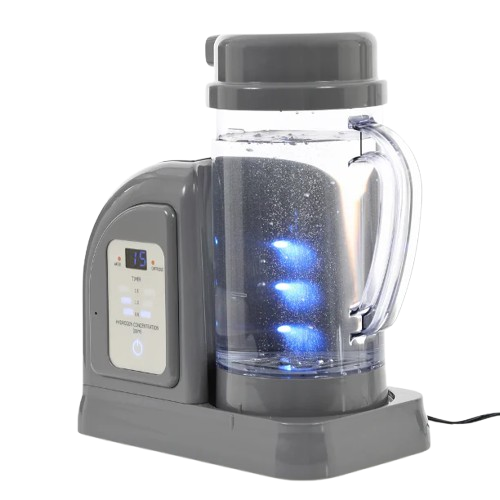
Molecular hydrogen (H₂) research represents a separate branch of cellular health science focused on selective antioxidant mechanisms. Unlike general antioxidants that neutralize various reactive oxygen species indiscriminately, hydrogen water produced by a water generator demonstrates selective action against specific harmful radicals.
A 2023 paper published in Pharmaceuticals explained that H₂ is able to specifically target certain free radicals as part of typical redox reactions. H₂ can also increase the expression of Nrf2 and endogenous antioxidant enzymes [8].
This selective mechanism differs fundamentally from broad-spectrum antioxidants. Research published in 2012 clarified that unlike superoxide, which can be eliminated by SOD, the hydroxyl radical cannot be eliminated by an enzyme [9].
Unique Properties of Hydrogen Molecules
The physical properties of hydrogen molecules enable unique cellular interactions. Studies have documented that molecular hydrogen reacts with and detoxifies the hydroxyl radical without forming other radicals [9]. The research identified specific advantages including its high biomembrane penetration and intracellular diffusion capability which enable it to reach subcellular compartments like mitochondria [9].
This selective preservation of beneficial signaling molecules distinguishes hydrogen from other antioxidant approaches. Rather than suppressing all oxidative processes, molecular hydrogen appears to target only the most harmful radicals while maintaining normal cellular signaling functions.
Exercise Recovery and Performance Research
Scientists have investigated molecular hydrogen in exercise contexts through systematic reviews and meta-analyses. A 2024 study published in Frontiers in Nutrition found that H₂ supplementation can help support antioxidant potential capacity in healthy adults, especially in intermittent exercise [10]. This finding reflects hydrogen’s targeted action rather than blanket antioxidant effects.
Another 2024 meta-analysis examined performance metrics, concluding that H₂ supplementation showed interesting results for supporting lower limb explosive power and reducing RPE during vigorous exercise. However, it does not enhance endurance performance and muscle strength [11]. These specific findings indicate that molecular hydrogen’s effects vary across different performance parameters.
Research on trained individuals found that eight days of HRW supplementation influenced muscular endurance performance in trained individuals [12]. The study suggested that this may be attributed to the effect of hydrogen molecules on mitochondrial oxidative phosphorylation, which in turn supports the antioxidant potential of the human body during high-intensity exercise [12].
Mechanisms and Cellular Pathways
The mechanisms through which molecular hydrogen influences cellular processes remain an active area of investigation. Research indicates that hydrogen molecules can cross cellular membranes readily due to their small size and neutral charge, allowing access to intracellular compartments including mitochondria.
Studies examining hydrogen’s effects on cellular signaling have identified interactions with various molecular pathways. The upregulation of endogenous antioxidant enzymes through Nrf2 activation represents one documented mechanism, though researchers continue investigating the full scope of hydrogen’s cellular interactions.
Conclusion
Research into cellular wellness continues advancing through multiple distinct pathways, from plant compounds to selective antioxidant mechanisms, each representing unique areas of scientific inquiry. The study of resveratrol has revealed complex interactions with sirtuin proteins, mitochondrial biogenesis pathways, and cellular markers, though challenges in bioavailability and the need for more human trials remain. Separately, molecular hydrogen research has identified selective antioxidant properties and specific effects on exercise recovery, operating through entirely different mechanisms than plant polyphenols.
Both research areas contribute independently to the broader understanding of cellular health science. While resveratrol studies focus on sirtuin activation and mitochondrial function through plant-derived compounds, molecular hydrogen research explores selective radical scavenging and endogenous antioxidant upregulation. These parallel but separate scientific investigations each offer unique insights into cellular processes.
As research progresses, the importance of distinguishing between different scientific approaches becomes increasingly clear. Each pathway – whether examining plant compounds or selective antioxidants – provides distinct pieces of the cellular health puzzle. Understanding these mechanisms independently allows for more informed evaluation of the evidence behind various wellness approaches.
Stay informed about emerging cellular health research by exploring science-based wellness articles that present findings from peer-reviewed studies with appropriate context and limitations clearly stated.
These statements have not been evaluated by the Food and Drug Administration (FDA). Holy Hydrogen products are not intended to diagnose, treat, cure, or prevent any disease. All content is for educational and general wellness purposes only and should not be considered medical advice. Holy Hydrogen does not make any claims or give any medical advice.
References
[1] International Journal of Molecular Sciences. “Resveratrol: Clinical Evidence Review.” 6 January 2024. https://pmc.ncbi.nlm.nih.gov/articles/PMC10815776/
[2] Frontiers in Genetics. “SIRT1 and Aging: A Detailed Review.” 9 May 2024. https://pmc.ncbi.nlm.nih.gov/articles/PMC11112063/
[3] Frontiers in Genetics. “Resveratrol’s Molecular Mechanism via SIRT1 Activation.” 2024. https://www.frontiersin.org/journals/genetics/articles/10.3389/fgene.2024.1393181/full
[4] PubMed Central / National Institutes of Health. “Resveratrol’s Antioxidant Mechanisms and Mitochondrial Effects.” 2021. https://pmc.ncbi.nlm.nih.gov/articles/PMC8289612/
[5] PubMed Central / National Institutes of Health. “Resveratrol and PGC-1α Mitochondrial Biogenesis.” 2023. https://pmc.ncbi.nlm.nih.gov/articles/PMC10286596/
[6] PubMed Central / National Institutes of Health. “NAD+ in Mitochondrial Function and Cellular Energy.” 2022. https://pmc.ncbi.nlm.nih.gov/articles/PMC9512238/
[7] Phytotherapy Research. “Resveratrol Bioavailability and Dosing Considerations.” January 2025. https://pubmed.ncbi.nlm.nih.gov/39557444/
[8] Pharmaceuticals. “Molecular Hydrogen’s Selective Antioxidant Mechanism.” 7 November 2023. https://pmc.ncbi.nlm.nih.gov/articles/PMC10674431/
[9] PubMed Central / National Institutes of Health. “Molecular Hydrogen as a Selective Antioxidant.” 2012. https://pmc.ncbi.nlm.nih.gov/articles/PMC3788323/
[10] Frontiers in Nutrition. “H₂ Supplementation and Exercise Antioxidant Capacity.” 25 March 2024. https://www.frontiersin.org/journals/nutrition/articles/10.3389/fnut.2024.1328705/full
[11] Frontiers in Nutrition. “Hydrogen and Exercise Performance Meta-Analysis.” 5 June 2024. https://www.frontiersin.org/journals/nutrition/articles/10.3389/fnut.2024.1387657/full
[12] Frontiers in Physiology. “Hydrogen-Rich Water and Muscle Endurance Performance.” 2024. https://www.frontiersin.org/journals/physiology/articles/10.3389/fphys.2024.1458882/pdf