
A wearable buzzes at 3 a.m. The screen glows with a heart rate variability (HRV) reading that looks lower than yesterday’s. A sleep score has dropped seven points for no obvious reason. What was supposed to be a tool for empowerment has become a source of quiet dread—a feeling that something might be wrong, even when nothing has changed.
This experience is far more common than many realize. Researchers at the American Academy of Sleep Medicine have even coined a clinical term for one manifestation of it: orthosomnia—a preoccupation with optimizing sleep data that can paradoxically disrupt the very sleep it aims to improve [1]. As the authors noted, “there are a growing number of patients who are seeking treatment for self-diagnosed sleep disturbances such as insufficient duration and quality of sleep because of data from these devices” [1].
The promise of wearable technology was clarity and control. For many, however, it has delivered something closer to chronic unease. This article explores the psychology behind health tracking anxiety, offers a practical framework for interpreting biometric data without spiraling, and introduces evidence-informed wellness practices—including molecular hydrogen—that can help shift the experience from reactive monitoring to intentional, confidence-building engagement.
Why Wearables Trigger Anxiety: The Psychology of Constant Monitoring
The relationship between self-tracking and anxiety is not a character flaw—it is a well-documented psychological pattern. Research published in Psychology & Health has found that self-tracking behaviors are associated with higher levels of health anxiety, particularly when individuals use data to self-diagnose or seek reassurance [4]. The study observed that “individuals who engaged in more frequent health-related self-tracking reported higher levels of health anxiety and cyberchondria” [4].
Three mechanisms help explain why more data does not automatically equal more control:
- Threat detection bias. The brain’s threat-detection system is designed to flag ambiguity as potential danger. A slight dip in HRV or an unexpected resting heart rate spike—both entirely normal daily fluctuations—can register as alarm signals when viewed without context.
- Frictionless access removes natural limits. Unlike a weekly doctor visit, wearables provide continuous, on-demand data. This removes the behavioral friction that would normally limit checking, making compulsive monitoring effortless.
- The reassurance trap. Checking a metric and finding it “normal” provides temporary relief—but that relief is short-lived, reinforcing the urge to check again. This cycle operates through negative reinforcement, the same mechanism underlying many compulsive behaviors.
Research on cyberchondria has further demonstrated that this pattern can negatively affect subjective well-being, with frequent health-related data checking associated with increased anxious days and reduced quality of life [4]. Critically, the problem is not the data itself but the absence of an interpretive framework and behavioral boundaries around how that data is engaged with.
A Framework for Intentional Monitoring: What to Track, When, and Why
Moving from anxious quantification to intentional regulation begins with understanding what common metrics actually represent—and what they do not.
Key Recovery Metrics in Context
- Heart Rate Variability (HRV): Often presented as a single number, HRV reflects the variation in time between heartbeats and is influenced by autonomic nervous system activity. Higher variability generally indicates greater parasympathetic (rest-and-recovery) tone. However, HRV fluctuates significantly day-to-day based on sleep, hydration, stress, and training load. A single low reading is rarely meaningful; trends over weeks are far more informative.
- Resting Heart Rate: A useful long-term indicator of cardiovascular fitness and recovery status. Like HRV, it varies daily. Context matters: a slightly elevated resting heart rate after a hard training day or a stressful work week is an expected physiological response, not a cause for alarm.
- Sleep Consistency: Rather than fixating on a single night’s sleep score, research supports focusing on regularity—consistent bed and wake times—as a more reliable indicator of restorative rest.
The Critical Distinction: Acute vs. Chronic Oxidative Stress
As wearable ecosystems expand, some platforms are beginning to surface markers related to oxidative stress—a concept that sounds alarming but deserves nuance. Acute, adaptive oxidative stress—such as the temporary increase following exercise—is a normal part of physiological adaptation. It stimulates the body’s endogenous antioxidant defenses and is typically resolved within 24 hours [3]. This is fundamentally different from chronic oxidative stress, which reflects a sustained imbalance.
Understanding this distinction is essential for anyone interpreting recovery data. A post-workout spike in stress-related markers is not a warning sign; it is evidence of the body adapting. Comparing current values against personal baselines—rather than population averages—and accounting for contextual factors (training intensity, sleep quality, life stress) transforms the same data from a source of worry into a source of insight.
Bounded Monitoring Windows
Research on structured self-monitoring suggests that establishing fixed review times—weekly or twice-weekly, rather than continuous—is associated with fewer negative stress episodes and anxious days [5]. The principle is simple: create psychological distance from momentary fluctuations by designating specific windows for data engagement.
Building Confidence Through Action: Pairing Practice with Data
The shift from passive data consumption to intentional regulation accelerates when observation is paired with deliberate action. When a consistent wellness practice is introduced and its effects are observed over time, the feedback loop changes character—from “What does this number mean?” to “Here is what I did, and here is how my metrics responded over the past week.”
Four evidence-supported practices offer particularly observable feedback loops:
Breathwork
Slow, nasal, diaphragmatic breathing has been shown to positively influence vagal tone, HRV, and parasympathetic activity [6]. Importantly, the effects on HRV can be rapid and observable within a single session, providing immediate reassuring feedback that the body is responding to intentional input.
Sleep Optimization
Sleep is the most directly observable recovery metric in most wearable ecosystems. Consistent sleep routines—regular timing, reduced blue light exposure, cooled sleeping environments—tend to produce measurable improvements in wearable sleep scores within days to weeks, offering early evidence that deliberate choices translate into tangible data shifts.
Molecular Hydrogen
Molecular hydrogen (H₂) represents one area of ongoing scientific interest relevant to recovery-focused wellness practices. A study published in Nature Medicine explored H₂’s antioxidant properties, observing its selective interaction with certain reactive oxygen species in a laboratory setting [2]. Research in this area is still emerging, and most published studies involve small sample sizes. Further large-scale, long-term trials are needed to confirm preliminary findings [3].
Separately, a study published in Molecules investigated the effects of hydrogen-rich water on exercise recovery markers in healthy individuals [3]. The researchers emphasized that results are preliminary and that individual responses may vary based on training status, and they called for additional research to confirm their observations [3].
For individuals practicing intentional monitoring, incorporating a well-defined wellness action—such as drinking hydrogen-rich water—and then observing recovery metrics during a scheduled review window can transform the data loop from anxious scanning into purposeful observation. The confidence comes not from any guaranteed outcome but from the sense of agency that deliberate practice provides.
Mindfulness and Meditation
Research has observed that regular meditation practice is associated with positive shifts in certain physiological markers across diverse populations [7]. Like breathwork, meditation offers a measurable feedback loop—observable shifts in resting heart rate and HRV trends over weeks of consistent practice—that reinforces the connection between intentional action and physiological response.
The Regulated Self Protocol: Putting It All Together
Drawing from behavioral science and the evidence-informed practices above, the following five-step framework offers a structured path from reactive monitoring to intentional engagement:
1. Bounded Monitoring Windows
Establish fixed times for data review—ideally once or twice per week. Disable push notifications for non-critical metrics. The goal is to create deliberate psychological distance from momentary fluctuations.
2. Contextualized Interpretation
Before reacting to any metric, note the relevant context: sleep quality the previous night, training intensity, work stress, hydration, nutrition. Compare current values to personal baselines. Ask: “Does this fluctuation reflect expected autonomic activation given my recent context, or is it part of a sustained multi-week trend?”
3. Deliberate Wellness Practices
Between monitoring windows, engage in one or two intentional recovery actions—hydrogen-rich water, breathwork, sleep routine consistency, meditation. Time these practices to allow observable metric responses at the next scheduled review.
4. Reflective Journaling
Pair each review window with a brief written note: contextual factors, observed metrics, emerging patterns, and subjective feelings. Over weeks, this builds a personal evidence base that replaces uncertainty with accumulated, individualized insight.
5. Weekly Trend Analysis
Evaluate trends across the full week rather than reacting to single-day values. Look for convergent patterns across multiple metrics (e.g., HRV, resting heart rate, sleep consistency trending in the same direction). Reserve concern for sustained, multi-week trends rather than isolated deviations.
A Note on Privacy and Trust
An often-overlooked contributor to monitoring anxiety is concern about data privacy. Uncertainty about how biometric data is stored, shared, or monetized can amplify health-related worry. Choosing devices and platforms with transparent privacy policies and robust security protocols removes one additional layer of unease.
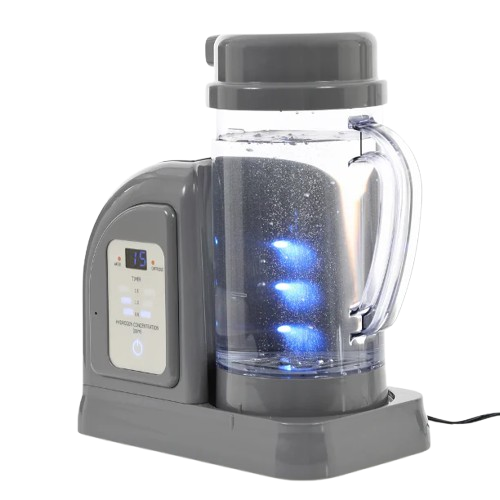
This principle of transparency extends to wellness tools more broadly. The Lourdes Hydrofix Premium Edition reflects this approach: independent testing by Japan Food Research Laboratories, clearly documented engineering specifications, separate-chamber electrolysis so drinking water never touches the electrodes, high-purity titanium and platinum electrodes (no plated metals), a PFOA/PFOS-free Japanese-manufactured polymer membrane, and no BPA, plasticizers, or heavy metals detected in produced water. It is 100% engineered and hand-built in Japan.
From Data Anxiety to Data Wisdom
The quantified self was never meant to be a source of chronic worry. Wearable data, interpreted within a clear framework and supported by deliberate wellness practices, can serve as a powerful tool for self-understanding rather than self-surveillance.
The shift from anxious quantification to intentional regulation does not require abandoning tracking. It requires structure: bounded monitoring windows, contextualized interpretation, deliberate recovery actions, reflective journaling, and the patience to evaluate trends rather than react to fluctuations. When tangible wellness practices—breathwork, sleep optimization, hydrogen-rich water, mindfulness—are woven into the routine, the data loop transforms. Numbers become feedback, not threats.
Understanding both the capabilities and the limitations of personal biometric data is, in itself, a meaningful form of wellness literacy.
Curious about how high-purity molecular hydrogen fits into a mindful wellness routine? Learn more about the engineering and specifications behind the Lourdes Hydrofix Premium Edition at holyhydrogen.com.
The Lourdes Hydrofix Premium Edition is a hydrogen water generator. It is not a medical device and is not intended to diagnose, treat, cure, or prevent any disease. The hydrogen water and hydrogen gas produced by this device are intended for general wellness purposes only. Consult your healthcare provider before making changes to your wellness routine.
References
[1] Baron, K.G., Abbott, S., Jao, N., Manalo, N., & Mullen, R. “Orthosomnia: Are Some Patients Taking the Quantified Self Too Far?” Journal of Clinical Sleep Medicine. https://jcsm.aasm.org/doi/10.5664/jcsm.6472
[2] Ohsawa, I., Ishikawa, M., Takahashi, K., et al. “Hydrogen acts as a therapeutic antioxidant by selectively reducing cytotoxic oxygen radicals.” Nature Medicine. https://www.nature.com/articles/nm1577
[3] LeBaron, T.W., Laher, I., Kura, B., & Slezak, J. “Hydrogen Gas: From Clinical Medicine to an Emerging Ergogenic Molecule for Sports Athletes.” Molecules. https://www.ncbi.nlm.nih.gov/pmc/articles/PMC6963236/
[4] Holliday, J., Wall, E., Treasure, J., & Weinman, J. “The Impact of Self-Tracking on Health Anxiety and Cyberchondria.” Psychology & Health. https://www.tandfonline.com/doi/abs/10.1080/08870446.2019.1626393
[5] Structured self-monitoring research referenced in behavioral science literature on bounded tracking schedules.
[6] Breathwork and vagal tone research referenced in clinical studies on diaphragmatic breathing and parasympathetic activation.
[7] Meditation research referenced in meta-analytic reviews of mindfulness-based practices and physiological markers.