
The ability of blood vessels to relax, expand, and efficiently deliver oxygen-rich blood throughout the body depends on a remarkably small molecule: nitric oxide (NO). Produced naturally by the endothelium — the thin layer of cells lining every blood vessel — nitric oxide acts as a critical signaling molecule that influences vascular flexibility, blood flow, and overall wellness [1][2].
For those who want to understand why certain wellness practices work at a physiological level, nitric oxide sits at the center of some of the most well-studied pathways in vascular science. Breathwork, movement, and nutrition all converge on this single molecule’s production.
Yet there is a dimension to this story that most wellness resources overlook entirely. Producing nitric oxide is only half the equation. Oxidative stress can rapidly degrade nitric oxide before it exerts its beneficial effects — and as research continues to reveal, protecting what the body already produces may be just as important as generating more of it in the first place.
The Science of Nitric Oxide Production: Three Natural Pathways
Understanding how the body generates nitric oxide reveals multiple, complementary routes — each responsive to different lifestyle inputs.
Endothelial Synthesis via eNOS
The primary source of vascular nitric oxide is the endothelial nitric oxide synthase (eNOS) enzyme, located within the cells lining blood vessels. A 2021 review published in PubMed Central explains that one of the most important functions of the eNOS enzyme is to produce a sufficient amount of NO that regulates and maintains vascular tone [2].
The activation of eNOS is elegantly mechanical. When blood flows smoothly across the endothelium — a force called shear stress — it triggers a two-phase cascade. According to research published in PubMed Central, this involves a rapid activation of calcium, forming calcium-calmodulin complexes and recruiting eNOS, followed by phosphorylation of eNOS by protein kinases [3]. This produces a rapid initial activation due to the influx of calcium into the cytosol, followed by a sustained period of activation due to protein kinases [3].
Think of it as a two-stage engine: an immediate spark followed by a sustained burn. A 2025 review in Frontiers in Physiology further clarifies the upstream mechanics, describing how shear stress upregulates eNOS expression by triggering PIEZO1 Ca²⁺ channels and a mechanosensory complex leading to the activation of KLF2, which binds directly to the NOS3 promoter [1].
Once produced, nitric oxide diffuses into the smooth muscle cells surrounding the vessel. There, as described in the literature, it activates soluble guanylate cyclase (sGC) in vascular smooth muscle cells, elevating cyclic GMP (cGMP) and causing vasodilation [1][2]. This is the fundamental mechanism behind healthy blood flow regulation.
The Dietary Nitrate-Nitrite-NO Pathway
A second route bypasses the eNOS enzyme entirely. Dietary nitrates — abundant in certain vegetables — are converted to nitrite by bacteria in the oral microbiome, then further reduced to nitric oxide in the stomach and bloodstream. This entero-salivary pathway represents an independent, nutrition-responsive source of NO that becomes particularly relevant as eNOS efficiency may change with age [7][8].
Paranasal Sinus Production
The third pathway is perhaps the most surprising. Research published in Nitric Oxide: Biology and Chemistry established that nitric oxide is released in large quantities from the epithelium of the paranasal sinuses in humans and that nasal NO is formed mainly in the paranasal sinuses by constitutively expressed NO synthases [5]. Further research has identified the ethmoid sinuses as particularly significant contributors to nasal NO output [6]. This reservoir of nitric oxide becomes accessible through a simple, underappreciated practice: nasal breathing.
Practical Protocols: Breathwork, Movement, and Nutrition
Breathwork: Nasal Breathing and Humming
Nasal breathing does more than filter and warm inhaled air — it draws nitric oxide from the paranasal sinuses into the airways. A landmark study published in the American Journal of Respiratory and Critical Care Medicine demonstrated a striking effect: nasal NO increased 15-fold during humming compared with quiet exhalation [4]. The mechanism involves oscillating airflow that ventilates the sinuses and thereby greatly increases nasal nitric oxide levels [4].
Beyond humming, structured breathwork shows broader promise for wellness. Research on Inspiratory Muscle Strength Training (IMST) found that just 5 minutes per day of high-resistance inspiratory training over 6 weeks was associated with meaningful observations in vascular function markers [7]. A meta-analysis of breathing exercises further supports the connection between structured breathwork and circulation-related outcomes [8].
Practical application: Incorporating habitual nasal breathing throughout the day — with periodic humming exercises (such as 5–10 cycles of prolonged humming exhalations) — may help leverage the paranasal sinus NO reservoir, based on the mechanisms described in the research.
Movement: Zone 2 Aerobic Exercise
Since eNOS activation depends on shear stress from blood flow, sustained aerobic movement is one of the most direct ways to stimulate endothelial NO synthesis. Zone 2 exercise — moderate-intensity, steady-state aerobic activity maintained at a conversational pace — produces the kind of sustained, laminar blood flow that research associates with upregulation of eNOS expression [1][3].
Studies indicate that exercise-induced nitric oxide production contributes to improved endothelial function and vascular remodeling over time [1][9]. Importantly, this response is dose-dependent and cumulative — regular, sustained movement appears more supportive than occasional high-intensity bursts for this particular pathway.
As age-related changes in the vasculature progress, maintaining consistent aerobic activity becomes increasingly relevant. Research suggests that vascular oxidative stress tends to increase with age without a proportional increase in antioxidant defenses [9][10], making the exercise-eNOS connection progressively more important.
Nutrition: Dietary Nitrates and Amino Acid Precursors
The dietary nitrate pathway offers a complementary, nutrition-based strategy. Nitrate-rich foods — including beetroot, spinach, arugula, and celery — provide the raw material that oral bacteria convert to nitrite, which then becomes available for NO production throughout the body.
Research on beetroot juice has shown particular interest in the scientific community. Studies have observed that dietary nitrate supplementation via beetroot juice may support exercise performance through enhanced NO bioavailability [7][8]. The oral microbiome plays a critical role in this conversion — a detail worth noting, as antiseptic mouthwashes can disrupt this pathway.
L-citrulline and L-arginine represent a nitrate-independent route. L-arginine serves as the direct substrate for eNOS, while L-citrulline is converted to L-arginine in the kidneys and may offer more sustained bioavailability. Some research has explored potential effects when combining these amino acid precursors with dietary nitrate strategies [8].
The Overlooked Problem: How Oxidative Stress Undermines Nitric Oxide
Here is where the conversation shifts from production to preservation — and where many wellness resources stop short.
Superoxide radicals react with nitric oxide at near-diffusion-limited rates, converting it into peroxynitrite — a highly reactive molecule that not only eliminates the beneficial NO but can itself cause further oxidative damage [9][10]. This means that even robust NO production can be undermined if the local oxidative environment is unfavorable.
The problem compounds through a mechanism called eNOS uncoupling. The eNOS enzyme requires a cofactor called tetrahydrobiopterin (BH4) to function properly. When oxidative stress converts BH4 to its oxidized form (BH2), eNOS “uncouples” — and instead of producing nitric oxide, the enzyme begins generating more superoxide [9][10]. This creates a vicious cycle: uncoupled eNOS produces the very molecule that destroyed the NO in the first place, accelerating further BH4 depletion and deepening the imbalance.
Research indicates that this oxidative burden tends to increase with age, while endogenous antioxidant defenses do not necessarily compensate proportionally [9][10]. This age-related shift reframes the central question: it is not just about making more nitric oxide — it is about protecting the nitric oxide the body already produces.
What Researchers Are Exploring: Molecular Hydrogen and Oxidative Stress
This is where molecular hydrogen (H₂) enters the conversation as a subject of emerging scientific interest. The following section summarizes published research findings — not product claims. Research is ongoing, and further studies are needed to confirm preliminary observations.
Selective Antioxidant Properties
Unlike broad-spectrum antioxidants that may indiscriminately neutralize all reactive oxygen species — including those that serve important signaling functions — researchers have explored molecular hydrogen’s selective antioxidant behavior. Studies suggest that H₂ may preferentially scavenge hydroxyl radicals (·OH) and peroxynitrite (ONOO⁻) while preserving physiologically important reactive species like hydrogen peroxide and superoxide that participate in cell signaling [11][12]. Most of these findings are derived from preclinical models, and further studies are needed to confirm these observations in broader human populations.
This selectivity is particularly relevant to the nitric oxide discussion. The peroxynitrite formed when superoxide reacts with NO is among the specific species that hydrogen has been studied for its potential to address [11]. These findings remain preliminary.
eNOS Coupling and BH4 Observations
Several studies have investigated hydrogen’s potential influence on the BH4/BH2 ratio and eNOS coupling. One study exploring hydrogen inhalation in professional athletes observed that pre-exercise hydrogen inhalation was associated with maintenance of elevated levels of NO, L-arginine, and BH4 post-exercise compared to controls [13]. While noteworthy, such studies are generally small in scale, and results may not generalize to all individuals or contexts.
Endothelial Function Observations
Preliminary findings from a small human study observed that daily consumption of high-concentration hydrogen water was associated with changes in peripheral vascular endothelial function, as measured by reactive hyperemia index [14]. It is important to note that these results are from limited studies and further research is needed.
Beyond Direct Scavenging
Researchers have also explored molecular hydrogen’s influence on broader cellular pathways, including modulation of signal transduction, gene expression, and activation of the Nrf2/ARE pathway — a master regulator that can upregulate the body’s own endogenous antioxidant enzymes [11][12]. This suggests that hydrogen’s effects may extend beyond simple radical scavenging to include supporting the body’s intrinsic antioxidant capacity. These observations remain an active area of investigation.
One of molecular hydrogen’s notable physical properties is its ability to rapidly diffuse across biomembranes, reaching subcellular compartments including mitochondria — locations where oxidative stress can be particularly relevant to vascular function [11].
About the Lourdes Hydrofix Premium Edition
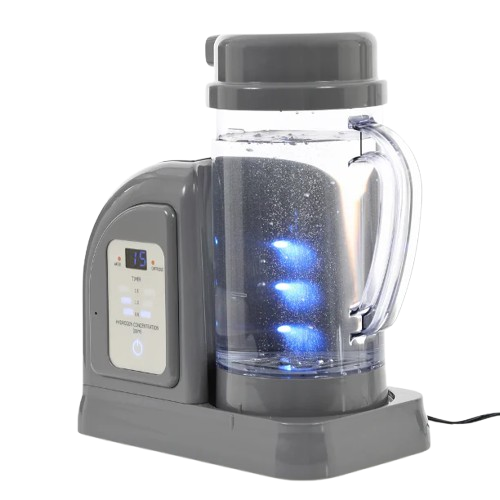
For those interested in incorporating molecular hydrogen into their daily wellness routine, the Lourdes Hydrofix Premium Edition is a Japanese-engineered hydrogen water generator that produces up to 1.6 ppm dissolved hydrogen in drinking water and delivers 120 mL/min of 99.9995% pure hydrogen gas for inhalation.
Key engineering details:
- Separate-chamber electrolysis — drinking water never touches the electrodes
- High-purity titanium and platinum electrodes — no plated metals
- 100% engineered and hand-built in Japan
- PFOA/PFOS-free Japanese-manufactured polymer membrane
- Third-party tested by Japan Food Research Laboratories
- No BPA, plasticizers, or heavy metals detected in produced water
- pH-neutral hydrogen water — no alkaline alteration
- 1-year warranty
Independent laboratory testing has evaluated the device’s hydrogen output and water quality under specified conditions.
A Multi-Layered Strategy for Supporting Circulation
Nitric oxide sits at the intersection of some of the most actionable wellness practices available: nasal breathing and humming to tap the paranasal sinus reservoir, consistent zone 2 aerobic exercise to stimulate eNOS through shear stress, and nitrate-rich nutrition to fuel an independent production pathway. Each of these approaches is supported by a substantial body of published research.
The emerging understanding of NO preservation adds an essential layer to this picture. When oxidative stress scavenges nitric oxide and uncouples the very enzyme responsible for producing it, even the most diligent production strategies may fall short. Research into molecular hydrogen’s antioxidant properties and its potential influence on eNOS coupling represents a separate area of scientific inquiry that explores the degradation side of the equation. Research is ongoing, and most studies involve small sample sizes.
Sustainable wellness, as the research suggests, is about both production and preservation — a multi-modal approach grounded in mechanism, not shortcuts.
Curious about how high-purity molecular hydrogen fits into a daily wellness routine? Explore our research library to learn more about what studies are investigating — and how to evaluate the evidence for yourself.
The Lourdes Hydrofix Premium Edition is a hydrogen water generator. It is not a medical device and is not intended to diagnose, treat, cure, or prevent any disease. The hydrogen water and hydrogen gas produced by this device are intended for general wellness purposes only. Consult your healthcare provider before making changes to your wellness routine.
References
[1] Chen, Y., et al. “Endothelial Nitric Oxide Synthase and Vascular Function.” Frontiers in Physiology. https://www.frontiersin.org/journals/physiology/articles/10.3389/fphys.2025.1545044/full
[2] Kareem, A., et al. “eNOS and Cardiovascular Health.” PubMed Central. https://pmc.ncbi.nlm.nih.gov/articles/PMC8774925/
[3] Sriram, K., et al. “Shear Stress-Mediated eNOS Activation Model.” PubMed Central. https://pmc.ncbi.nlm.nih.gov/articles/PMC4944664/
[4] Weitzberg, E., and Lundberg, J.O. “Humming Greatly Increases Nasal Nitric Oxide.” American Journal of Respiratory and Critical Care Medicine. https://pubmed.ncbi.nlm.nih.gov/12119224/
[5] Lundberg, J.O. “Nitric Oxide and the Paranasal Sinuses.” Nitric Oxide: Biology and Chemistry. https://pubmed.ncbi.nlm.nih.gov/21816223/
[6] “Paranasal Sinus Contributions to Nasal NO.” PubMed Central. https://pmc.ncbi.nlm.nih.gov/articles/PMC10170969/