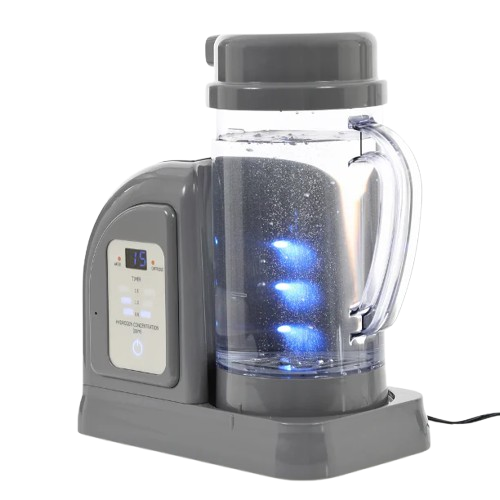

The growing interest in molecular hydrogen for wellness has led to an important question: what’s the difference between drinking hydrogen-enriched water and inhaling hydrogen gas? With various delivery methods available, understanding how each approach works—from absorption pathways to practical daily use—becomes essential for making informed decisions about incorporating molecular hydrogen into wellness routines.
The Science Behind Each Method
Hydrogen Water: The Oral Route
When molecular hydrogen is dissolved in water and consumed, it follows a specific absorption pathway through the digestive system. Research published in Biomarker Insights demonstrated that ingestion of hydrogen water rapidly increased breath hydrogen to approximately 40 parts per million within 10-15 minutes, while plain water showed no such effect [4]. This finding indicates that hydrogen molecules pass through the stomach lining and intestinal walls, entering the bloodstream relatively quickly.
The concentration of hydrogen in water typically ranges from 0.5 to 1.6 parts per million (ppm), depending on the generation method and device engineering. Once absorbed, the hydrogen circulates through the body via the bloodstream, reaching various tissues before being expelled primarily through respiration.
Hydrogen Inhalation: The Respiratory Route
Hydrogen gas inhalation presents a different absorption mechanism. When hydrogen gas is inhaled, it enters the lungs and diffuses directly across the alveolar membrane into the bloodstream. A study in Scientific Reports using animal models found that different organs showed varying saturation times when exposed to inhaled hydrogen, with most organs reaching saturation within 6-9 minutes, while muscle tissue required approximately 20 minutes [3].
The research revealed that maximum hydrogen concentrations varied by tissue type, with the liver showing the highest concentration (29.0 ± 2.6 μmol/L) and kidneys the lowest (18.0 ± 2.2 μmol/L) [3]. This variation suggests that inhalation may deliver different hydrogen levels to specific organs compared to oral consumption.
Practical Applications and Daily Integration
Convenience and Timing Considerations
Hydrogen water offers straightforward integration into daily routines. The rapid absorption profile—peaking within 10-15 minutes—makes it suitable for consistent and daily consumption as part of regular hydration habits.
Hydrogen inhalation requires a dedicated time commitment and stationary setup. Research protocols have examined various durations, with one study on elite rugby players using 60-minute inhalation sessions prior to high-intensity interval training [7]. A safety study published in Frontiers in Medicine confirmed that continuous hydrogen gas inhalation for 24-72 hours in healthy adults produced no clinically significant adverse events, noting only minor, clinically insignificant increases in hematocrit and platelet counts [6].
Concentration and Exposure Differences
The concentration of hydrogen delivered differs substantially between methods. While hydrogen water provides a bolus dose that peaks and diminishes relatively quickly, inhalation offers sustained exposure at potentially higher concentrations. The respiratory route allows for continuous hydrogen delivery as long as inhalation continues, potentially maintaining more stable tissue concentrations over extended periods.
Research Insights on Method Effectiveness
Exercise and Recovery Applications
Multiple systematic reviews have examined molecular hydrogen’s role in exercise contexts. A 2024 meta-analysis in Frontiers in Nutrition found that hydrogen supplementation may support the body’s natural response to exercise-related oxidative stress [1]. The review highlighted hydrogen’s selective action on specific reactive oxygen species [1].
Another 2024 systematic review examining physical performance found that hydrogen supplementation showed promise in supporting exercise recovery and the body’s natural management of exercise-induced stress markers [2]. These findings suggest specific applications where molecular hydrogen shows research interest, regardless of delivery method.
Engineering Quality Factors
Separate-Chamber Electrolysis Technology
The quality of hydrogen generation significantly impacts both delivery methods. Advanced devices utilize separate-chamber electrolysis with PEM/SPE membranes, which physically separate hydrogen from electrolysis by-products. According to technical specifications, hydrogen is separated from the by-products of electrolysis including oxygen and other impurities [5].
This engineering approach eliminates concerns about unwanted compounds in the generated hydrogen, whether for water enrichment or gas inhalation. Devices using high-purity titanium and platinum electrodes in separate chambers can generate hydrogen without requiring careful monitoring of water composition [5].
Laboratory Testing and Verification
Independent laboratory testing provides crucial verification of hydrogen output and purity levels. Devices that undergo third-party testing for both hydrogen concentration and water quality offer transparency about actual performance under specified conditions. This testing becomes particularly important for dual-function devices that provide both hydrogen water and inhalation capabilities, as each function requires different engineering considerations and safety standards.
Making an Informed Decision
Matching Method to Wellness Goals
The choice between hydrogen water and inhalation often depends on individual lifestyle factors and wellness objectives. Those seeking convenient integration into existing hydration routines may find hydrogen water more practical. Individuals interested in sustained exposure during specific activities, such as meditation or recovery periods, might consider inhalation protocols.
Research suggests that both methods demonstrate measurable effects on various biomarkers in controlled studies, though the specific outcomes may vary based on exposure duration, concentration, and individual factors. The selective action of molecular hydrogen on specific reactive species indicates a nuanced biological interaction that may manifest differently depending on delivery method and context [1].
Quality and Safety Considerations
Regardless of the chosen method, device engineering quality remains paramount. Separate-chamber electrolysis systems offer advantages in producing pure hydrogen without unwanted by-products. Material safety, particularly the use of appropriate electrode materials and membranes, ensures consistent performance over time.
Safety studies have established that both hydrogen water consumption and gas inhalation are well-tolerated in healthy adults when using properly engineered devices [6]. The absence of significant adverse events in extended inhalation studies provides reassurance about the safety profile of this delivery method when appropriate equipment is used.
These statements have not been evaluated by the Food and Drug Administration (FDA). Holy Hydrogen products are not intended to diagnose, treat, cure, or prevent any disease. All content is for educational and general wellness purposes only and should not be considered medical advice. Holy Hydrogen does not make any medical claims or give any medical advice.
References
[1] Wang Y, et al. “Effects of molecular hydrogen supplementation on fatigue and aerobic capacity in healthy adults: A systematic review and meta-analysis.” Frontiers in Nutrition. 2024. https://pmc.ncbi.nlm.nih.gov/articles/PMC10999621/
[2] Zeng Z, et al. “Molecular hydrogen supplementation and physical performance in healthy adults: a systematic review and meta-analysis.” Frontiers in Nutrition. 2024. https://pmc.ncbi.nlm.nih.gov/articles/PMC11188335/
[3] Yamamoto R, et al. “Hydrogen gas distribution in organs after inhalation: Real-time monitoring of tissue hydrogen concentration in rat.” Scientific Reports. 2019. https://pmc.ncbi.nlm.nih.gov/articles/PMC6362202/
[4] Shimouchi A, et al. “Molecular Hydrogen Consumption in the Human Body during the Inhalation of Hydrogen Gas.” Biomarker Insights. 2009. https://pmc.ncbi.nlm.nih.gov/articles/PMC2716677/
[5] H2H2O. “Hydrogen Machines: Ionizers vs H2 Generators.” H2H2O – Hydrogen Technology Resource. 2023. https://www.h2h2o.eu/info/hydrogen-mashines/inonizers-h2generators
[6] Cole AR, et al. “Safety of Prolonged Inhalation of Hydrogen Gas in Air in Healthy Adults.” Frontiers in Medicine. 2022. https://pmc.ncbi.nlm.nih.gov/articles/PMC8872329/
[7] Botek M, et al. “Molecular Hydrogen Positively Affects Physical Performance and Respiratory Function during Exercise in Healthy Adults: A Randomized, Placebo-Controlled, Single-Blinded Trial.” Journal of Sports Science & Medicine. 2022. https://pmc.ncbi.nlm.nih.gov/articles/PMC9104058/