
The modern workplace, constant connectivity, and environmental pressures have created unprecedented levels of stress in contemporary society. This has led to growing interest in evidence-based natural approaches for supporting the body’s stress response systems. Among the most researched botanical compounds are adaptogens—substances that help the body adapt to stress by modulating various physiological pathways. This comprehensive analysis examines the scientific evidence behind rhodiola and ashwagandha, two extensively studied adaptogens, exploring their distinct mechanisms in supporting the body’s natural stress response.
The Science of Stress Response
Understanding the HPA Axis
The body’s primary stress response system centers on the hypothalamic-pituitary-adrenal (HPA) axis, a complex network of hormone-producing organs that regulate cortisol production. [Researchers have noted the importance of this system in managing daily stress responses.] This system begins with the hypothalamus releasing corticotropin-releasing hormone (CRH), which signals the pituitary gland to produce adrenocorticotropic hormone (ACTH), ultimately triggering cortisol release from the adrenal glands.
Under normal conditions, the HPA axis operates through a self-regulating negative feedback loop. [Studies indicate this system helps maintain balance in the body’s stress response.] However, ongoing stress can affect this delicate balance, potentially impacting wellness including energy levels, sleep patterns, and immune function.
Cortisol Rhythms and Oxidative Stress Pathways
Healthy cortisol function follows a predictable circadian rhythm, with levels typically highest upon awakening and gradually declining throughout the day. This natural pattern supports energy metabolism, immune regulation, and cognitive performance. Disruption of these rhythms—whether through stress, poor sleep, or environmental factors—can impact multiple body systems simultaneously.
Beyond hormonal changes, stress generates reactive oxygen species (ROS), creating oxidative stress that can affect cellular structures. This dual burden of hormonal imbalance and oxidative stress underlies many stress-related wellness challenges, suggesting that comprehensive stress management approaches might benefit from addressing both pathways.
Adaptogen Deep Dive: Mechanisms and Evidence
Rhodiola Rosea: The Energy-Supporting Adaptogen
Rhodiola rosea stands out as a primary adaptogen recognized by regulatory authorities for stress-related support. [Research has identified rhodiola as a notable botanical for supporting the body’s stress response and energy metabolism.]
Mechanism of Action: Research reveals rhodiola’s unique dual mechanism. [Studies suggest rhodiola may help support normal cortisol patterns while also supporting cellular energy production.] This means rhodiola not only helps support the body’s stress response but also supports cellular energy production—a combination particularly beneficial for those experiencing stress-related fatigue.
Neurotransmitter Modulation: Beyond cortisol support, rhodiola influences brain chemistry. [Research has observed that rhodiola administration may influence various neurotransmitter receptors in the central nervous system.] This multi-system influence helps explain rhodiola’s reported effects on mood, focus, and mental performance during stressful periods.
Clinical Evidence: [In controlled studies, participants taking rhodiola extract showed measurable improvements in attention indices and burnout scales compared to placebo.]
Ashwagandha: The Stress-Support Powerhouse
Ashwagandha (Withania somnifera) has emerged as one of the most extensively researched adaptogens for stress management. [Studies involving adults have shown ashwagandha supplementation was associated with improvements in subjective stress and sleep quality measures.]
Primary Bioactive Compounds: The adaptogenic properties of ashwagandha stem primarily from withanolides, steroidal lactones unique to this plant. [Research has identified several key bioactive compounds responsible for various biological effects.]
HPA Axis Modulation: [Studies have demonstrated ashwagandha’s influence on the HPA axis, with researchers observing changes in morning cortisol patterns in supplementation groups.]
Dose-Response Relationship: [Analysis reveals that benefits may vary with different dosing levels, with 500 to 600 mg/day showing consistent results in research settings.] This has led to standardized recommendations, with 300-600 mg daily of root extract (standardized to 5% withanolides) commonly suggested for general wellness support.
Hormonal Balance Beyond Cortisol: Interestingly, ashwagandha’s effects extend beyond cortisol support. [Research in adult men has observed changes in various hormone markers during supplementation periods.] This broader influence may contribute to improved energy and recovery during stressful periods.
The Complementary H₂ Pathway
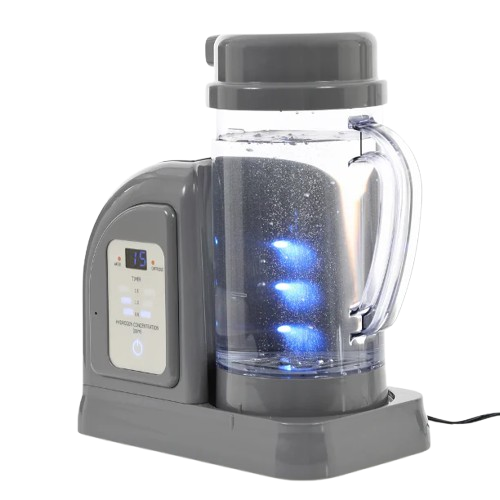
A separate field of research explores selective antioxidants like molecular hydrogen, which targets harmful oxidative stress markers. Research has demonstrated that hydrogen-rich water can influence exercise-induced oxidative stress markers without interfering with beneficial adaptive responses to physical training.
The selective antioxidant properties of molecular hydrogen make it particularly relevant for wellness support. Unlike conventional antioxidants that may indiscriminately neutralize all reactive oxygen species—including those needed for cellular signaling—molecular hydrogen specifically targets certain harmful radicals. This selective action preserves normal cellular functions while supporting the body’s natural response to oxidative stress.
Studies examining molecular hydrogen in various populations have observed improvements in markers of oxidative stress. This suggests that combining adaptogenic herbs with hydrogen-rich water might support both aspects of stress response, offering a comprehensive approach.
Practical Integration Protocol
Timing and Dosing Strategies
Morning Protocol: Consider taking rhodiola extract (200-400 mg standardized to 3% rosavins and 1% salidroside) upon waking to support natural cortisol rhythm and daytime energy. Rhodiola’s energizing properties make morning administration ideal for most individuals.
Evening Protocol: Ashwagandha (300-600 mg standardized extract) works well in the evening, supporting relaxation and sleep quality. Its calming properties complement the body’s natural cortisol decline.
Hydrogen-Rich Water Integration: Consuming hydrogen-rich water throughout the day, particularly during high-stress periods or before and after exercise, may provide additional support for managing oxidative stress markers. The rapid absorption and distribution of molecular hydrogen make timing less critical than with botanical adaptogens.
Combination Considerations
Research suggests these approaches can be safely combined for comprehensive wellness support. The distinct mechanisms—rhodiola’s energy support, ashwagandha’s stress response modulation, and molecular hydrogen’s selective antioxidant effects—work through different pathways without significant interaction concerns.
Monitoring Response: Individual responses to adaptogens vary significantly. Starting with single compounds before combining allows for better assessment of personal response patterns. Heart rate variability (HRV) monitoring, subjective stress scales, and sleep quality tracking can help evaluate effectiveness.
Cycling and Long-Term Use
Many practitioners recommend cycling adaptogens—using them for 6-8 weeks followed by a 1-2 week break—to maintain effectiveness. However, research on optimal cycling protocols remains limited, and some studies have safely used continuous supplementation for several months.
Personalized Approach Based on Stress Patterns
Different stress patterns may respond better to specific adaptogens:
High-stress, difficulty sleeping pattern: Ashwagandha’s calming effects may be particularly beneficial for individuals experiencing sleep disruption.
Low-energy, burnout pattern: Rhodiola’s dual action on stress response and energy metabolism may better support those experiencing fatigue and mental fog.
Exercise-induced stress: The combination of adaptogens with molecular hydrogen may be especially relevant for athletes managing training stress while maintaining performance.
Conclusion
The scientific evidence supporting rhodiola and ashwagandha for stress management continues to grow, with multiple controlled trials demonstrating measurable effects on stress markers and quality of life metrics. Understanding the distinct mechanisms of these adaptogens—rhodiola’s energy-supporting properties and ashwagandha’s stress response modulation—enables more targeted selection based on individual stress patterns and wellness goals.
The integration of molecular hydrogen represents an innovative complementary approach, addressing the oxidative stress component that adaptogens may not fully target. This dual-pathway strategy—combining stress response support through adaptogens with selective antioxidant support from molecular hydrogen—offers a comprehensive framework for natural stress management grounded in current research.
As stress remains a pervasive challenge in modern life, evidence-based natural approaches provide valuable tools for supporting resilience and maintaining wellness. The key lies in understanding these mechanisms, selecting appropriate interventions based on individual needs, and implementing consistent protocols while monitoring response.
Explore our comprehensive guide to building your personalized stress resilience protocol, combining traditional adaptogenic wisdom with cutting-edge wellness research.
These statements have not been evaluated by the Food and Drug Administration (FDA). Holy Hydrogen products are not intended to diagnose, treat, cure, or prevent any disease. Holy Hydrogen does not make any claims. All content is for educational and general wellness purposes only and should not be considered medical advice.